Deep Foam Injection & Soil Stabilization
Ground Failing Beneath Your Concrete or Structure?
If the problem is below the surface, lifting alone won’t fix it. Deep foam injection stabilizes the soil where the issue actually starts.
Fast, controlled, and minimally invasive — designed to fix the root cause, not just the symptoms.
Warning Signs
Signs the Problem Is Deeper Than the Surface
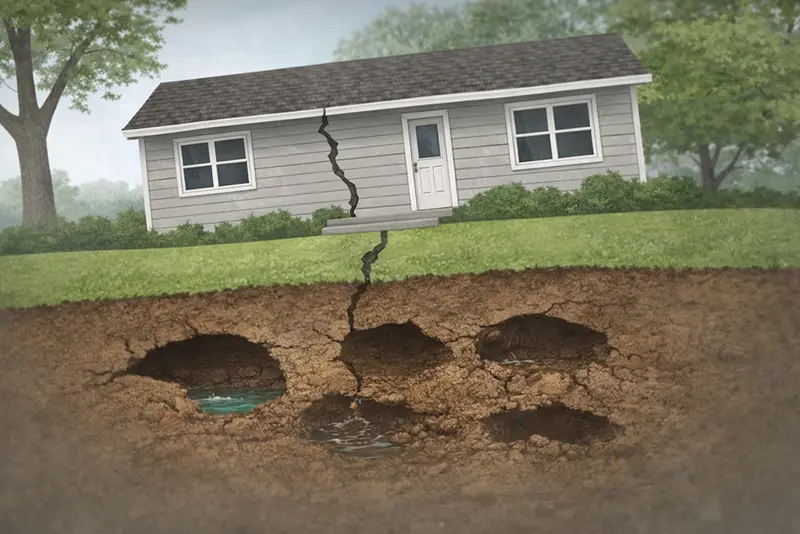
Not all sinking concrete problems start at the surface. In many cases, the issue is happening below — where you can’t see it.
Concrete Keeps Sinking
Concrete continues to settle even after previous repair attempts.
Cracks Keep Returning
Cracks reappear because the support underneath has not been corrected.
Water Is Pooling
Drainage problems can weaken soil and create instability below.
Voids Are Forming
Empty spaces under slabs or structures can lead to settlement.
Settlement Is Uneven
One side of a slab, pad, or structure may drop more than the rest.
Common Applications
Where Deep Foam Stabilization Works
This process is used in situations where soil has weakened, shifted, or washed out — creating instability below.
Foundations & Structural Slabs
Stabilize weak soil beneath areas where movement can affect the structure above.
Driveways With Repeat Settlement
Address the base problem when driveway sections continue to sink or shift.
Garage Floors & Interior Slabs
Support interior concrete where voids or soft soil are creating movement.
Equipment Pads & Utility Structures
Stabilize concrete pads supporting equipment, sheds, telecom structures, or utility areas.
Erosion-Prone Areas
Fill voids and stabilize soil where water has washed away support.
Commercial Concrete
Help reduce disruption while stabilizing problem areas around business properties.
Our Process
How Deep Foam Injection Works
We stabilize the ground using a controlled injection process that targets weak soil at depth.
Identify Weak Zones
We locate voids and unstable soil beneath the slab or structure.
Inject Through Small Access Points
Small-diameter injection points allow us to reach deep into the problem area.
Foam Expands & Compacts Soil
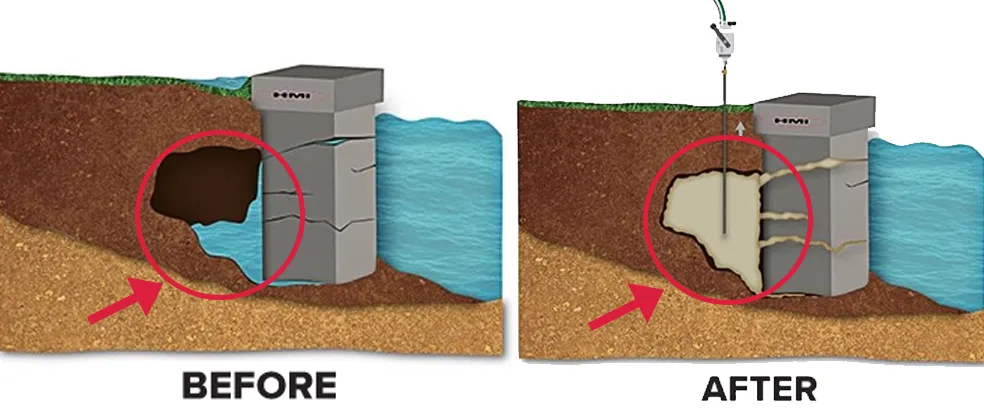
High-density polyurethane foam fills empty spaces and compresses loose material.
Stabilized Support Is Created
The result is a solid, load-bearing base that supports the structure above.
Below the Surface
What’s Happening Underground
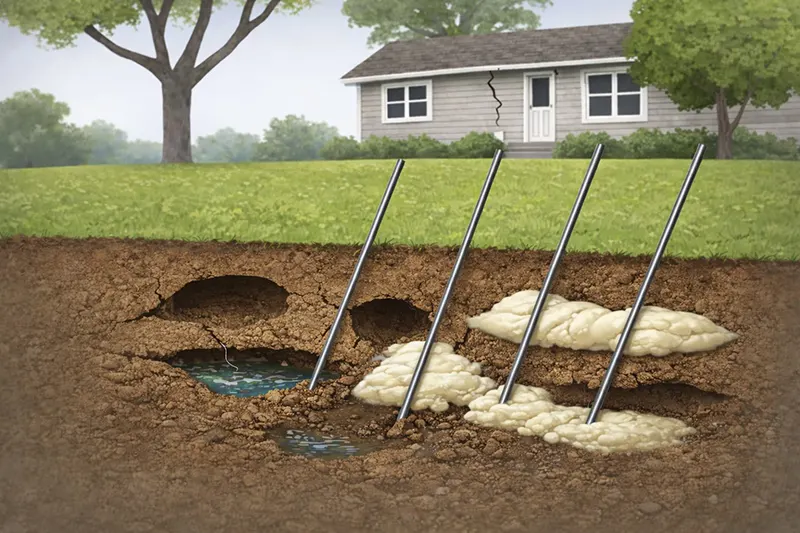
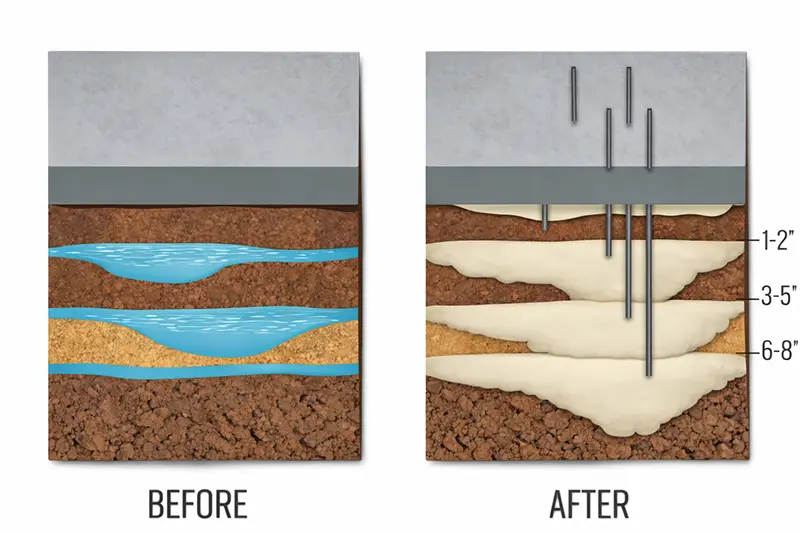
As the foam expands underground, it moves into weak zones and reinforces the soil from within.
🗹 Fills voids beneath slabs and structures
🗹 Binds loose or shifting soil
🗹 Creates a stronger, more stable base
🗹 Helps prevent future settlement
This is not just lifting — it’s stabilizing the ground at its source.
The Missing Piece
Why Surface Fixes Don’t Last
Concrete lifting can fix the symptom — but not always the cause.
🗙 It doesn’t fix underlying soil problems
🗙 Voids remain beneath the surface
🗙 Soil continues to shift over time
🗙 Settlement often returns
When the soil is unstable, the only long-term solution is to stabilize it.
Know the Difference
Polyurethane Injection vs. Traditional Cement Grouting
Not all soil stabilization methods perform the same. Here’s how they compare in real-world conditions.
Traditional Cement Grouting
🗙 Requires large equipment and heavy access
🗙 Larger injection holes, often 1–2 inches or more
🗙 Slurry-based process can leave mess behind
🗙 Often requires excavation or disruption
🗙 Absorbs water and may be less effective in wet soils
🗙 Slower cure time before the area can be used
🗙 Adds significant weight to already weak soils
🗙 Higher labor and material cost in many cases
Polyurethane Injection Used by Liftwerx
🗹 Lightweight, mobile equipment with minimal disruption
🗹 Small 5/8″ injection points
🗹 Clean process with no slurry or major cleanup issues
🗹 No excavation required in most situations
🗹 Displaces water and performs in wet conditions
🗹 Fast cure time with same-day use in many cases
🗹 Expands and strengthens soil without adding heavy weight
🗹 Often more cost-effective than traditional methods
For Engineers, Property Managers & Commercial Projects
A Smarter Approach to Soil Stabilization
Polyurethane injection is an engineered solution used to stabilize weak soils, fill voids, and restore load-bearing support — without excavation or major disruption.
It allows targeted treatment of problem areas at depth, rather than overcorrecting the entire soil profile.
Injection Method
High-density polyurethane is injected through small-diameter rods into weak or unstable soil zones. As the material expands, it fills voids and compacts surrounding soils in place — without disturbing adjacent structures.
Depth & Control
Injection depth and pressure are controlled in real time, allowing us to target specific failure zones. This can range from shallow voids beneath slabs to deeper soil layers several feet below grade.
Load-Bearing Improvement
Once cured, the foam forms a dense, structural matrix within the soil. This increases compressive strength and restores load-bearing capacity — helping prevent future settlement.
Moisture Performance
Polyurethane is not affected by water during installation. It actively displaces moisture, making it effective in saturated soils where traditional grout methods often struggle.
Key Technical Characteristics
~5/8 Inch
Typical injection point size15–30 Minutes
Typical cure timeSame Day
Load return in many casesLow Weight
High strength-to-weight ratioHydro-Insensitive
Performs in wet soil conditions
Controlled Expansion
Adjusted based on soil and site conditions
Common Use Cases
🗹 Voids beneath slabs or foundations
🗹 Settlement around structures
🗹 Soil instability where excavation is not feasible
🗹 Interior slab stabilization with limited downtime
🗹 Erosion or washout conditions
🗹 Equipment pads, telecom structures, and utility areas
Why It Works
Why Property Owners Choose Deep Foam Stabilization
Stabilizes at Depth
Targets the problem below the surface, not just the visible symptom.
Minimal Disruption
No major excavation needed in most situations.
Works in Wet Soil
Polyurethane displaces moisture and performs in unstable conditions.
Fast Cure
Many areas are ready for use the same day.
Prevents Settlement
Helps reduce the risk of continued movement.
Avoids Replacement
Often solves the issue without tearing out and rebuilding.
Questions & Answers
Frequently Asked Questions
If the soil beneath your concrete has lost support or voids are present, stabilization may be needed to fix the root problem.
Injection depth can vary depending on conditions, but stabilization can reach several feet below the surface to target weak zones.
In many cases, yes. By strengthening the soil beneath the structure, stabilization helps reduce the risk of continued movement.
Yes. This process is commonly used under foundations, slabs, equipment pads, and utility structures with minimal disruption.
Most projects are completed in hours, and surfaces are often ready for use the same day.
Once cured, polyurethane foam is stable and designed to remain in place beneath the surface. It is commonly used for concrete lifting, void filling, and soil stabilization projects.
If the Ground Is Failing, It Won’t Fix Itself
If you’re seeing signs of settlement, voids, or unstable soil, addressing it early can prevent bigger
and more expensive problems later.
Serving Northern Colorado Homeowners
Liftwerx Concrete Lifting Services offers residential concrete leveling and concrete repair across Northern Colorado. Based in Johnstown, we keep our service area tight so we can respond quickly, show up when we say we will, and build lasting relationships with the people we serve.
Whether you need your driveway lifted, your patio leveled, or your front steps made safe again, we’re right down the road and ready to help.
Areas We Commonly Serve
We provide concrete leveling and polyjacking services in:
If you’re located nearby but don’t see your city listed, don’t hesitate to reach out.
About Liftwerx Concrete Lifting Services
Liftwerx Concrete Lifting Services is a locally owned company based in Johnstown, CO, serving homeowners and businesses across Northern Colorado. We help fix sinking and uneven concrete that causes trip hazards, water drainage issues, and costly replacement concerns — without tearing out your existing slabs.
Using polyurethane foam concrete leveling, we lift and stabilize driveways, sidewalks, patios, garage floors, pool decks, and more for 50–70% less than replacement. Most projects are completed in just a few hours and are ready to use the same day. If your concrete is settling or uneven, call or text 970-578-9828 to schedule your estimate and restore safe, stable ground around your property.
Address: 491 Expedition Ln, Johnstown, CO 80534


Ready to Fix Your Sinking Concrete?
Liftwerx Concrete Lifting Services – Johnstown, CO
✉️ levelmyconcrete@gmail.com
Serving Loveland, Fort Collins, Windsor & surrounding areas.
Fast responses. No pressure. Free estimates.
© Copyright 2026 Liftwerx Concrete Lifting Services | Terms & Conditions | Developed By LevelRight Marketing
